Nangkeo Traditional Dance

The country of Laos in general, has a long tradition of cultural dances. The Khmu people, who form the ethnic minority, have a strong folkloric tradition that involves a variety of dances, such as sword dance (Foon Kmoq), bamboo sticks dance (Foon Swn-tiiq Ôm-diiq), and the Nangkeo dance etc…  Nangkeo dance is usually accompanied by the traditional Khmu music, gong, high hatch and swq-kool; it is not normally performed in regular gathering/events but instead this dance is being reserved for occasions including rituals and during the Greh (Khmu New Year) celebration.

Base from the history told verbally by our ancestors and elders those came before us, Nangkeo dance is the Khmu ethnic traditional dance and it’s performing at the annual Greh ceremony right after the sword dance has concluded. It is known within our Khmu tribes that the Greh location has been purified by the sword dancer and the location is readily for the Greh ceremony. At this point the dance is being performed to call the great ancestor’s spirits (Ta’ Cwaq/Ya’ Cwaq) to come and bless the Greh ceremony, embrace the gathering, and welcome the Khmu Greh ceremony. Nangkeo dancers are comprised together with group of ladies and gentlemen or just a group of ladies only; all dancers are wearing the tradition Khmu attires while dancing in circle around the Greh ceremony centerpiece.  

Normally, this dance is known to be performed in the following events:

  • During the Greh (Khmu New Year) celebration.
  • During the opening ceremonial of the new Shaman gathering house (Sala), Sala is the main Shaman and villager gathering house for special events.
  • The special ceremony party hosting by the leader of the village to welcome out of town distinguish guests and leaders.  

Furthermore, this dance is accompanied by the opening of the rice-wine jars, yams, taros, pumpkins, banana etc. as shown on the centerpiece picture above to offer to the respected elders, leaders and guests. The group of people are chanting and clapping hands while some of them are playing Khmu instruments/music such as hitting the gong, high hatch, and swq-kool while Nangkeo dancers are dancing around the Rice-wine centerpiece.  In the state, we are continuing to preserve many of our traditions and one of them is Nangkeo dance by teaching our Khmu youth this dance and has been performed at our annual Khmu New Year (Greh).

Written By: Judy Khoutsavanh
Source:
1. www.khmuoc.org
2. Steve B. Sengaroun

Cultural Aspects

The Khmu people have, for centuries, maintained their traditional culture, they have their own language, customs, beliefs and their own identity which make them different from other ethnic groups. The Khmu also have a rich language filled with fascinating legends and beautiful music. The following are the five major cultural aspects of the Khmu people:

  1. The Khmu kindship and family organization.
  2. The religion.
  3. The health.
  4. The language.
  5. The New Year

1. Khmu kinship and family organization

The Khmu people are made up of clans called “ Snta,” each of which identifies itself with a totemic ancestral being. They are then classified into three groups or lineages, those of which are quadruped, birds and plants.

1. Quadruped Lineage – May include clans such as: The Tiger, Pangolin, Badger and so on.

Picture: Thomas K. Manokoune

2. Bird Lineages – May include clans such as: Eagle, Toucans, Woodpecker, Wagtails and so on.

Picture: Thomas K. Manokoune

3. Plant Lineages – Do not have as many clans as the other Lineages. One example would be a Black fern.

Picture: Thomas K. Manokoune

Clans are often used as family names in many Khmu areas. No one may marry a member of his/her own clan.

2. The Religion

The Khmu were animist, and believed in many different spirits, that could affect their lives. In the 1940’s, while in Southeast Asia, fighting against the Japanese, the French introduced Christianity to the Khmu people. After World War II, the British and later the Americans, continued the missionary work started by the French. As a result of these influences, the Khmu in the Unites States are about 65% Catholic, 25% Christian (Protestant), and 10% other.

Picture: Thomas K. Manokoune

Khmu families are usually large, having an average of five children per household. The Khmu are taught to be friendly, honest, respectful and peaceful. Problems or feelings of sadness are to be kept inside, not to be shown to the others.

3. The Health

The Khmu people believe illness is caused by natural or supernatural phenomena. Treatment for illness include ingestion or application of herbal remedies, abdominal massage, herbal body massage, rituals and incantations. The shaman or spiritual healer performed ceremonies to invoke help from the spirit world in curing the ill.

Picture: Thomas K. Manokoune

4. Language

Khmu words are written in the emergent standard Roman-based Khmu orthography, derived from initial efforts of Catholic missionaries in 1950. The alphabetic inventory of Khmu are 29 consonant sounds and 30 vowels.

Picture: Thomas K. Manokoune

5. New year

In Laos, the Khmu New Year occurs at the end of the harvest season and is a celebration of the bounty that the Khmu farmers are able to win from the soil.

Picture: Thomas K. Manokoune

We hope that these brief overview of the Khmu cultural aspect will provide you with a better understanding of who the Khmu are and its traditional culture.

Written By: Thomas K. Manokoune (KNF Senior Advisor)

Sword Dances

The sword is a symbolic object that spans across countries, people, cultural groups and language. Every ethnic group may have similarities or comprehend the meaning and use of a sword totally different from one another.

Sword dance is part of the Greh ceremony, it represents the bravery of our ancestral warrior slashing and whirling his weapon to chase and scare the enemies. In addition, Sword dancer in the old day as known as Shaman whom has a power spirit to overpower of all bad spirits; performs his dance with sword to eliminate all bad spirits out of the ceremony’s location prior to the start of the Greh ceremony.

The Khmu people however, value the sword as a tool for protection; and during New Year celebrations or as referred to as ‘Mun Greh, the stature and magnitude of the sword is elevated. The person or persons partaking in the sword dance (phorn Kmoq) have been called and appointed by the respected elders of the village. The sword will be used as a tool of protection defending the rice crops from invaders that may take and steal from their new planting of rice in the fields.

The ‘Mun Greh is the celebration between the intense activity of the harvest and the hard work of establishing new fields and building new (Sala) houses (the house where village people gather to celebrate Greh). The sword dancer is the warrior that represents strength and toughness that transitions into making sure all the negative energies are guarded from entering the rice crops. The sword dancer is dressed in traditional Khmu attire; sometimes wearing a bandana and commanding a presence of bravery.

As the sword dancer prepares for the stage, he is guided by the sound of a gong. The participants in the celebration would constantly strike the gong and the crowds in observance begin to rally and cheer the sword dancer on. The beat of the gong, the cheery noise from the crowd, combined with the ambience of the ceremonious event, gives the sword dancer a fearless combatant demeanor and a heightened sense of power. This power can be felt through observers looking on and anticipating the beginning of the sword dance. In most cases, sword dancers would perform the sword dance solo or at times, they would dance in pairs going the opposite direction of each other. Once the sword dancer feels the rhythm and adrenalin from the crowd noise and the beating of the gong, he will then grab his sword from the ground and display his own style of spinning his sword in an array of movements.

Sometimes, sword dancers would dance with two swords rather than one. The purpose of having two swords not only optimizes the power of the warrior but it allows the sword dancer to clash both swords together in making a sound that establishes his presence in the fight to protect his people and their rice crop. In addition to that, the sword dancer’s job is to dance and spin his sword(s) in motion around the centerpiece of the ‘Mun Greh ceremony.

Nowadays, along with practicing the sword dance based on the ritual of the ancestors and tradition, some modern sword dancers in the United States observe sword dances as a work of art, style and competition. Some Khmu families would host New Year Celebrations (‘Mun Greh) at their homes and often would invite respected elders, who have been appointed by the community for sword dancing, to perform sword dances in these homes. As much as five or even ten sword dancers would go up one at a time, to showcase their sword dancing skills and be judged by the crowd at hand. These types of events highlight the ‘Mun Greh Ceremony and also provides the event a great form of entertainment.

Written By: David Daraseng
References:
1. www.richmondmuseum.org
2. www.herworks.la
3. www.khmuoc.org
4. www.phouiu-ecotourism-laos.com

Greh Ritual or New Year Celebration

Khmu’ is one of the three main ethnic groups in Laos which consists of the Lao Theung (Khmu’), Lao-Loum, and Lao Soung (Hmong). The Khmu’ ethnic group is the original indigenous inhabitants of Laos.  Khmu’ has their own language, written alphabets that was taught to them during the colonial era.  They preserve and protect their culture, beliefs, and traditional costumes which makes them unique from the many ethnic groups in Laos. The Greh Ritual ceremony is the most important New Year celebration for Khmu’ people.

The ritual processes observed during the Greh are what we believe and respect to be very important to our culture, a tradition that was passed down from our forefathers, Khoune Cheung (Ta’ Cwaq). No matter where Khmu people live, we always celebrate `Mun Greh, either as an individual family gathering or as a community social event. Every family, every clan, and in every city, Greh is celebrated in the month of December through January (‘Nwan Ciaq-‘Nwan Ñi)     
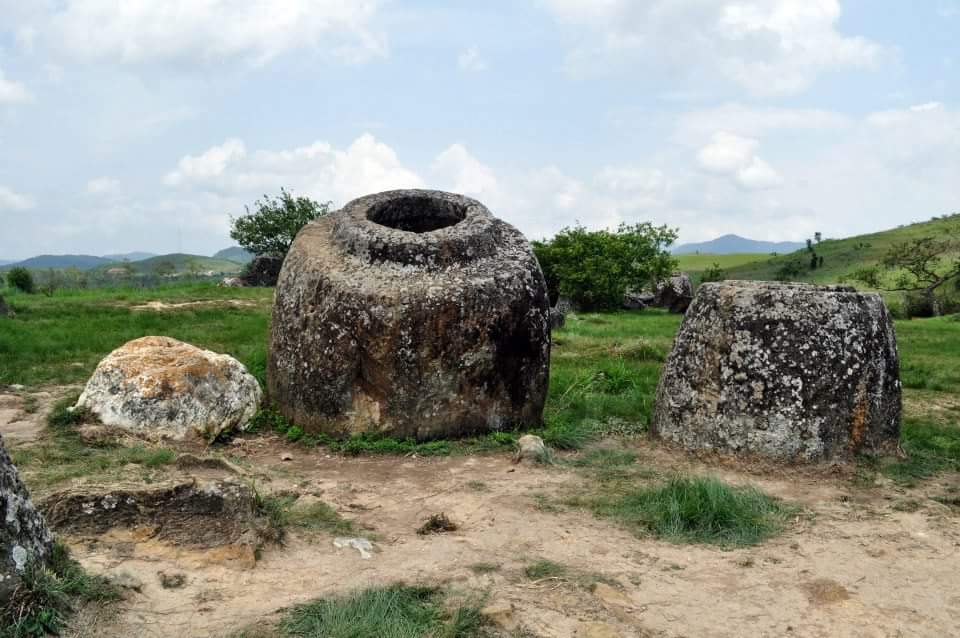
Kdoq-Cwaq (The Jar)

The Greh celebration represents many great aspects of life, such as preparing and serving food, raising all kinds of animals, planting crops in the fields, harvesting rice and storing the seeds for the next year’s farming season. The Greh ceremony consists of banana trees, sugar cane, flowers called Raaq Roon, two jars of rice wine as a centerpiece. The centerpiece’s decoration is surrounded with many different kinds of root and vining crops, such as yam, pumpkins and taro etc., and variety of farming tools such as shovels, sickles and knives.     

The main purpose of the Greh ceremony is for us Khmu people to remember and give thanks to our ancestor “Ta’ Cwaq, Ya’ Cwaq’.  We want to thank them for the year’s bountiful harvest from the farm, a healthy life, and peace for all Khmu’ people. During the ceremony we ask them to continue to give us abundant crop, healthy life, peace and prosperity in the up-coming year.

The steps or processes of the Greh Celebration

A group of people, young and old parade towards to the Greh’s centerpiece to announce the New Year celebration by dancing, singing and hitting gongs.

Sword dance is part of the Greh ceremony, it represents the bravery of our ancestral warrior slashing and whirling his weapon to chase and scare the enemies. In addition, Sword dancer in the old day as known as Shaman whom has a power spirit to overpower of all bad spirits; performs his dance with sword to eliminate all bad spirits out of the ceremony’s location prior to the start of the Greh ceremony.

Nang Keo Dance (Fone Nang-Keo) is performed right after the Sword Dance is completed. It’s a traditional dance for Khmu Greh ceremony. This dance is performed to call the great ancestor’s spirits to come and bless the Greh ceremony, embrace the gathering, and welcome the Khmu Greh ceremony.

Next step is to show respect to the community elders, leaders, and important guests by having them seated in front of the Greh’s centerpiece before the Shaman start the event.
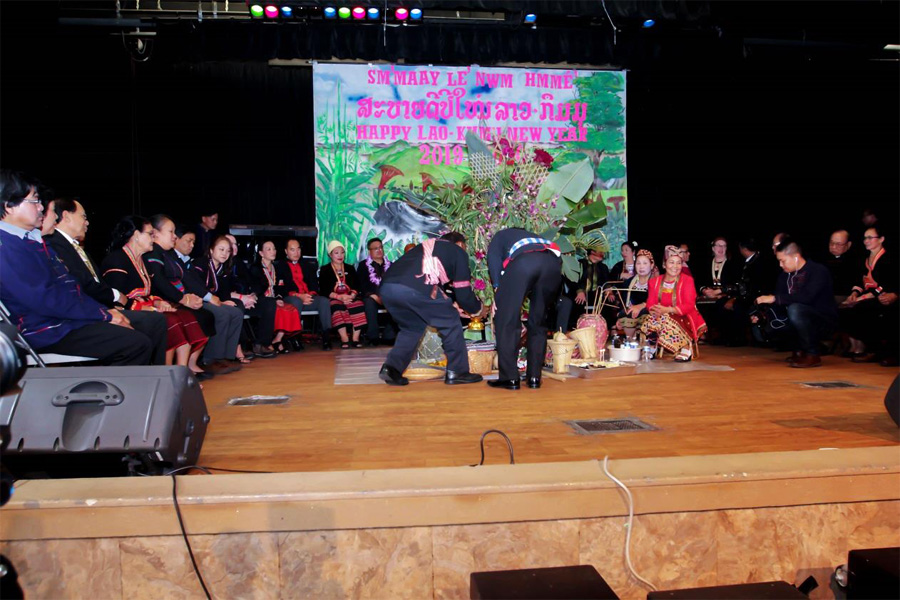
The first segment is the ritual performance ceremony that honors the current year by the Greh Shaman. Originally, Khmu in Laos performed Greh ceremony by having the Shaman take the hen, cut the beak, and smear blood down onto the knees of the family members and the respect elders. Currently in United States of America, Canada, and European countries, due to International Animal Rights Law, we use a of bundle of flowers dipped in the ceremony’s holy water instead. At this point the Shaman will swipe on the family/respected elder’s hands above their knees from top-down to the bottom while he is chanting and wishing for all the bad lucks such as sickness, diseases, economic sufferings, and starvation due to bad harvest to be gone. Once the first round of the ritual is completed, the first sacred rice-wine, which represents the previous year is opened for the respected members to drink. During this time there’s no singing of Khmu song called, “Term.”
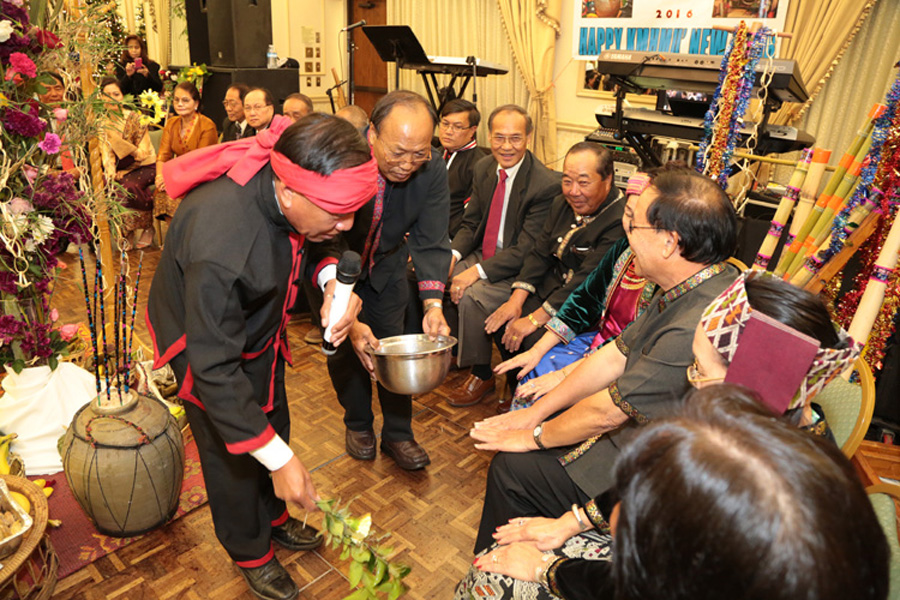
The second segment proceeds by the Greh’s Shaman to welcome the New Year. Again, traditionally, the Greh’s Shaman would take the rooster, cut the beak, and smear blood upward onto the knees of the family members and the respect elders. Currently, we once again use a bundle of flowers dipped in the ceremony’s holy water to smear the hands/knees of the family members and respect elders. At this point the Shaman will swipe on the family/respected elder’s hands above their knees from the bottom up. During this round all hands are   opened, facing up to receive the New Year’s prayers from the Greh’s Shaman.  The Greh’s Shaman will be chanting the Greh’s special verses to wish for a good life, good luck, good health, prosperity, peace and happiness for the up-coming new year. The second rice-wine jar is opened and all the respected members are invited to drink and welcome the New Year. During this time there will be selected folklore singers to sing “Term Khmu” while respected elders drink the rice-wine.  In addition, all the Khmu instruments such as swq-kool, pi, gong, and high hatch are being played at this segment. You can hear the sound of the gong and high hatch in a rhythmic tune of celebration, welcoming the Khmu New Year.
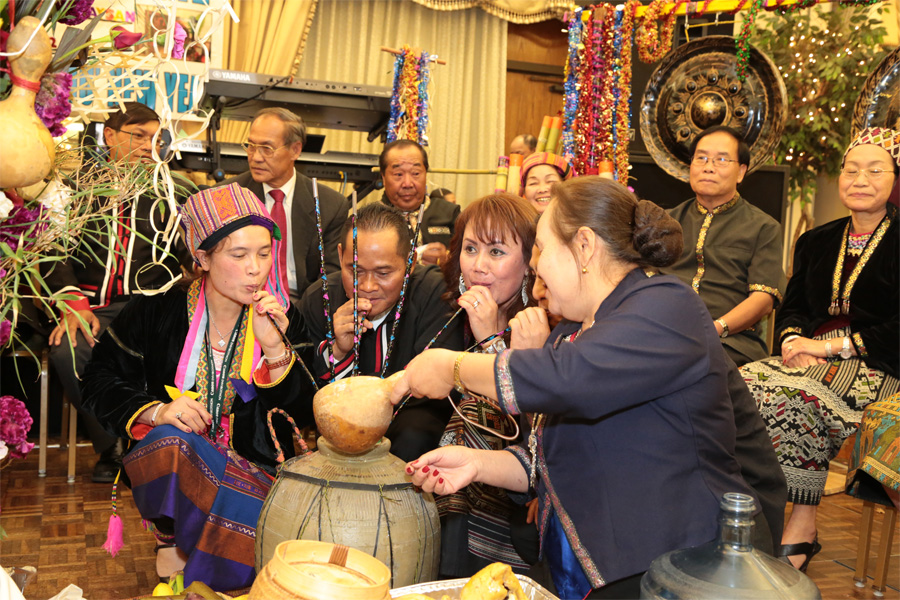
Lao-Khmu Traditional (Baci) ceremony

The Baci (Wrist-ties) ceremony is known to be the most important Ceremony in Laos and it’s performed by many ethnic groups in Laos. It’s believed to bring good luck and invites the good spirits to come back into the body and soul. Again, the Baci ceremony is being performed by the Master Ceremony by chanting the Baci language in wishing for a good life, good luck, good health, prosperity, peace and happiness for the up-coming year while all family members, respected elders, and important guests are seated around the centerpiece (Pha-Kwan).  After the Master ceremony finished chanting, then he ties the wrists of the elders and the most important guests first with the white strings from the center piece.

Thereafter, all people that gathered tie each other’s’ wrists with the white strings and wish one another a good luck and prosperity for the Khmu Greh New Year.

Happy Khmu New Year (Sm ‘maay le’ Nwm Hmmé’)

The main purpose of the “Greh” celebration is to preserve and protect our culture and heritage, to share our tradition with others, and most importantly, to pass it on to our future generations.

Written By: Tony Khoutsavanh
Resources:
1. www.khmuoc.org
2. The book of Khmu’ livelihood by Mr. Suksavang Simana and Elizabeth Preisig.

Building Leadership

Khmu leadership has historically been shaped by men, seniors, and tribal elders who built the foundation we stand on today. KNF honors their work while preparing the next generation of leaders.


Our leadership development strategies include:

Community Identification

Identifying young men and women across Khmu communities who show interest and aptitude for community service

Curriculum Development

Creating a culturally appropriate leadership curriculum that includes youth from all Khmu regions

Leadership Teams

Forming leadership teams focused on key areas: Higher Education, Fundraising, Community Outreach & Training, Elderly Care, and Cultural Preservation


These efforts ensure that leadership remains strong, diverse, and sustainable for decades to come.

Written By: Tracie Chulaparn Friedman (Co-Executive Director)

Higher Education

While many Khmu community members have achieved success in higher education, significant gaps remain. KNF aims to narrow these gaps by:

Root Causes & Barriers

Identifying root causes and barriers that prevent youth and families from pursuing higher education.

Reducing Barriers

Creating structures and resources to reduce these barriers.

Mentorship Model

Building a mentorship model that connects graduates and young adults with younger Khmu students.


Through these efforts, KNF seeks to strengthen educational pathways and bring communities together in support of student success.

Written By: Tracie Chulaparn Friedman (Co-Executive Director)

Cultural Preservation

KNF is dedicated to preserving the customs, traditions, and heritage of the Khmu people. Cultural preservation includes traditional clothing, music, hand tools, ethnic foods, dance, and ceremonial practices.

Khmu Cultural Celebration

A central tradition is the Quan hand tying ceremony, featuring whole chicken, eggs, white strings, fresh fruits, flowers, taro, yams, sticky rice, water, and wine.

Khmu Cultural Celebration

Ceremonies also include two rice wine jars, sword dances, Khmu singing of the Term, and traditional dances depicting rice planting and harvesting.

Khmu Cultural Celebration

Each year, KNF partners with one local Khmu Association to host the Annual Greh New Year Celebration, rotating among communities in Santa Ana, Fresno, Stockton, Bay Area cities, Washington State, Oklahoma, Arizona, and Massachusetts. This event allows KNF to support local communities, uphold cultural practices, and ensure traditions are passed on to future generations.

Written By: Tracie Chulaparn Friedman (Co-Executive Director)